Pickleball Eye Injuries and What You Need to Know to Avoid Them
At first glance, pickleballseems like a safe, enjoyable, leisurely sport...so what’s the problem?
There’s no denying it. One of the fastest growing sports for all ages is pickleball.
The sport has been around for a few decades, but has recently exploded in popularity for young and old alike. (In fact, the average pickleball player age is lowering, with the 25-34 age range taking the lead with the most pickleball players.)
For all of you pickleballers out there, the benefits are obvious:
socialization
physical and mental health benefits
weight and stress management
easy on the joints
it’s fun!
Unfortunately, along with all this fun and excitement comes injuries.
Specifically, eye injuries.
Check out this informational video to learn more:
Pickleball Is Leading To Major Rise In Eye Injuries
Here’s a Real Life Story You May Relate To
Last week, a patient of mine, Patrick, came to the office where I practice optometry. He was in a lot of pain, and his right eye looked terrible.
“Whoa! What happened to you?” I asked.
While sheepishly holding his hand over his eye, he said, “Pickleball injury. I really did it this time, doc. I hope it isn’t serious, but it hurts like hell.”
“Well, pickleball is definitely becoming a popular sport for many people–”. I hesitated because I hated to ask the next question. “So, were you by any chance wearing protective eye wear?”
Patrick just stared at me with his good left eye and mumbled a pitiful, “No.”
“Bummer.”
Nuff said.
What You Can Learn From Patrick’s Mistake?
Patrick didn’t actually get hit in the eye with the ball.
His teammate, Joe, slammed Patrick with his paddle during an overhead smash.
The good news: Joe hit the ball beautifully to score a well-earned point.
The bad news: Patrick was also attempting to smash the ball.
At the last second he realized Joe was going for the ball but couldn’t get out of the way fast enough. Pat caught the corner of Joe’s paddle directly in his right eye.
BAM!
His fellow pickleballers offered to drive him to my office, but Patrick felt that he could drive himself.
Who needs two good eyes to drive? Right? Wrong.
Patrick’s depth perception was thrown off and he backed into a parked car.
BAM!
No major damage - just minor scratches to both cars.
Yet another lesson learned: NEVER drive yourself to a doctor’s office, hospital, or clinic with an eye injury. Get an acquaintance or family member to drive you to an ophthalmologist, optometric physician, or hospital ER (remember to call ahead to make sure there is an ophthalmologist on call).

Joe drove Pat to our office.
Once he was examined and a game plan was set for his injury, he was handed the fee for the day's services.
Unfortunately, Pat doesn’t have health insurance.
BAM!
A Quick History of Pickleball and How it Relates to Eye Injuries
Pickleball started around 1965 - a cross between table tennis and lawn tennis. Since then, its popularity has skyrocketed, along with eye injuries. Treatment of these injuries has cost the healthcare system $250–$500 million…and that was just in 2023.
According to JAMA Ophthalmology there has been a boom in pickleball-related eye trauma in the past four years.
Injuries have increased by about 405 injuries per year from 2021-2024. Yikes!
In 2024 there were an estimated 1,200 pickleball-related eye injuries. Here’s a rough breakdown:
Direct hit by the ball (43%): The ball travels fast, and players are close to each other. Getting hit by the ball is inevitable. Especially during “Speed-ups”.
Falling (28%): Occurs mainly to elderly players.The face and eyes become injured.
Getting hit with the paddle (12%): Ouch! Not much else to say here.
Examples of Common Pickleball-Related Eye Injuries
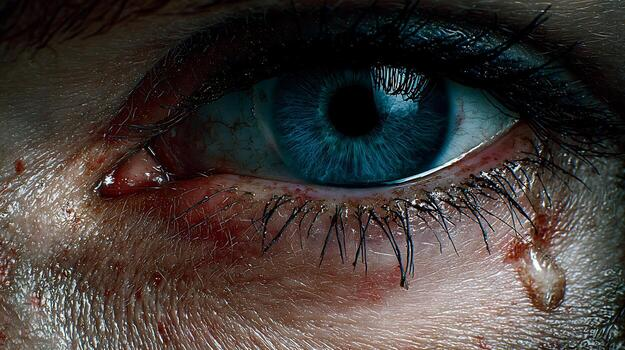
Corneal abrasion: When the front surface of the eye gets scratched usually by the ball or the paddle.
Hyphema: When the eye gets hit by a ball or paddle, blood vessels can break. When blood leaks into the front chamber of the eye, it’s a hyphema.
Lacerations of the eyelids and surrounding tissue: Eyelids or skin around the eye can get cut. Sometimes stitches are required.
Anterior Uveitis: Also called “Iritis”, it's an inflammation of the colored portion of the eye. Patients experience pain and light sensitivity.
Eyelid and Eyebrow Contusions: AKA Black Eye.
Subconjunctival Hemorrhage: Sounds worse than it is. Broken capillaries leak blood between the clear conjunctival membrane and the connective tissue known as Tenon’s Capsule. Reabsorbs in about a week or two. And no, “get the red out” drops (Visine) don’t help worth a damn.
Examples of Severe Pickleball-Related Eye Injuries That Can Cause Blindness
Retinal hole or tear: Holes and tears due to trauma need to be evaluated by a special ophthalmologist known as a retina specialist. They treat holes and tears with lasers and sometimes cold probes known as cryopexy. This is done in order to reduce the chance of the patient developing a detached retina.
Detached Retina: A devastating condition where several layers of the retina pull away from the back of the eye. Patients often experience a dramatic increase in flashes and floaters, and sometimes perceive what looks like a “shade” blocking part of their vision.
Rupture of the eyeball: Yes, it’s as bad as it sounds. A ruptured eye has developed a break or a tear (the eye itself, not just the retina) and can lead to blindness.
Dislocated Lens: The lens is the part of the eye that is behind the iris (the colored portion of your eye). It is responsible for our ability to focus on near objects. It’s also the part of the eye that gets cloudy with age, and then we call it a cataract. It can be traumatically dislocated, possibly requiring its removal and then replaced by a new lens called an ‘intraocular lens" or "implant".
Orbital or Blow-out Fracture: When a ball, or other high velocity object slams into the front of an eye, the force of the object pushes the orbital contents back and down. This force often cracks the floor of the orbit, known as the maxillary bone. Broken fragments of bone can trap fat, muscle or other orbital tissue. This can create diplopia, and often requires surgical treatment. This is what the above patient, Patrick, had which led to his observation of double vision (diplopia).
What Procedures Were Performed to Check Patrick’s Eye Following His Pickleball Accident?
Case history: I proceeded to ask Pat a bunch of questions about his eye. We discussed the extreme redness, pain, blur, tearing and diplopia (a fancy word that means double vision).
Vision: When it was time for Pat to start reading letters on the eye chart it was obvious that there was a problem. Normally Pat has great distance vision in each eye; like many people in their 60s he wears reading glasses as needed. But today the vision in his right eye really sucked. Not good.
Pupils, eye pressure and extraocular muscles: Pupils and pressure were normal. However, when Pat looked up, he experienced diplopia. Again, not good. We’ll get back to this shortly.
Eyelids: He had a minor laceration of his upper eyelid. Some blood, swelling and lots of pain. A definite red flag, meaning it could be a sign of bad things to come.
Anterior segment (various structures in the front of the eye): Pat had a pretty large corneal abrasion which contributed to some of his eye pain. All other structures were thankfully normal. No angle recession (which can contribute to high pressure in the eye and lead to a secondary form of glaucoma known as angle-recession glaucoma (ARG). His lens looked good. And there was no blood in his anterior chamber, known as a Hyphema. Phew!
Posterior segment (the inside of the eye where the retina is located): This is the time to start sweating a little. When we examine the inside of a trauma patient’s eye we look for any damage to the delicate structure that lines the back wall of the eyeball. This structure is known as the retina. We dilate your pupil with special eyedrops. Once your pupil is nice and wide, we examine your retina for holes, tears, detachments, and any other situation that reflects the trauma. We even get a close look at the vitreous, the fluid that fills the large chamber behind the lens, for any signs of blood; known as a vitreous hemorrhage.
Patrick’s Pickleball Eye Injury Treatment
Pat’s eyelid laceration didn’t need stitches; a Steri-Strip did the job. But at this point I knew Pat needed to be seen by an ophthalmologist, so his eyelid was going to get medical attention anyway.
The big problem was his symptom of diplopia - double vision - when he looked up.
That, and the pain that he was experiencing is usually a tell-tale sign of an Orbital or Blow-out Fracture. As mentioned above, a blow-out fracture occurs when an object hits the eye straight on thereby cracking and breaking orbital bones. The bones trap orbital tissue creating pain and double vision.
If that’s the bad news, here’s the good news: There are amazing ophthalmological specialists out there.
In this case we need to make use of the oculoplastic ophthalmologists. They are the plastic surgeons of eye care, and are the experts when it comes to treating and managing blow-out fractures.
Patrick might have been in bad shape soon after the pickleball injury, but he recovered quickly and was back on the pickleball court in just a few weeks.
Of course, he made sure that he always played pickleball while wearing his special safety glasses.
What Kind of Protective Eye Wear Should You Use For Pickleball?
There are many amateur athletes who feel that it isn’t necessary to wear safety glasses while playing pickleball, or other racquet sports.
There are too many pickleballers who wonder why they should even use protective eye wear:
“I’ve never had an eye injury, so I don’t think that I need protective eye wear.”
“How bad can pickleball eye injuries be?”
“Safety glasses are uncomfortable and can affect my game.”
We have already seen what could happen to someone like Patrick, and his situation didn’t even involve getting hit by the ball, but the pickleball paddle.
There’s enough statistical information to confirm how devastating pickleball eye injuries can be. So what are the important do’s and don’ts that we need to keep in mind?
Do’s:
Do wear Polycarbonate or Trivex lenses: Make sure your safety specs are made from one of these impact-resistant materials. You certainly want the lenses to protect against high-velocity hits from the ball and paddle. But the material should also be light in weight and shatterproof.
Do make sure lenses and frames are safety certified: Your protective eye wear better meet or exceed safety standards. Make sure your eye wear has evidence of being certified either by ANSI Z87.1 or ASTM F803. The latter certifies for all ball sports.
Do wear comfortable protective eye wear: As I mentioned above, pickleballers won’t wear safety specs if they’re not comfortable. We can’t affect our performance, can we? You don’t want any slippage during abrupt moves while you're sweating, so make sure the fit is comfortably snug. Can purchase safety glasses with rubber temple grips, and make sure the nosepads can be adjusted. And speaking of adjustment, make sure you periodically visit your friendly neighborhood optician to have the glasses adjusted.
Do use photochromatic lenses: If you play indoors and outdoors, consider photochromic lenses - you know, the ones that automatically get dark when you go outside, and then lighten up once you are indoors (I love mine; I think they’re awesome). If you get non-photochromic lenses, and you play indoors, then consider clear or light amber colored lenses for the best brightness and contrast. For outdoor play you need to keep your eye on the ball. Brown or rose-colored lenses will allow you to visualize the yellow/green pickleball for the best overall performance.
Do wear specs with UV Protection: An absolute must for outdoor play. Let’s keep the skin cancer and cataracts to a minimum, OK?
Do consider Anti-Fog lens spray: If you sweat like a pig as I do, then consider ant-fog spray or gel for your lenses. Made specifically for those intense matches when every visual advantage counts.
Do consider wraparound frames: This frame style helps to maintain good peripheral vision while minimizing blind spots. They also keep debris from entering the eye from the sides.
Don’ts:
Don’t use non-safety, non-prescription sunglasses: Unless they’re quality sun specs, they will be uncomfortable. They can shatter upon impact if they are not made of polycarbonate or Trivex. This will cause severe eye trauma. The only positive comment is that they are better than nothing.
Don’t use non-safety, prescription glasses: As in “dress eye wear”. Basically your standard everyday wear eyeglasses. Even if the lenses are made of safety material like polycarbonate (this material is often used for regular eyeglass lenses due to their reduced weight and thickness) the frames are NOT designed for the protection of high-velocity objects.
Don’t wear polarized sunglasses: These are an absolute no-no when playing outdoors. They might be good for fishing, snow sports and safety when driving a motor vehicle, but they are not recommended for outdoor racquet sports like pickleball. Why not? Because polarized lenses can adversely affect depth perception, which can hinder reaction time. This will make it more difficult to judge the pickleball’s distance and speed.
Don’t abuse your protective eye wear: This certainly goes for all eye wear, but it’s imperative for your quality safety specs. Take good care of them. Clean them with a quality lens cleaning wipe; throw a bunch in your athletic bag. If you really must, then use warm water, Blue Dawn dish soap and a clean microfiber cloth. Always store them in a quality case. Inspect them regularly for chips, cracks, blemishes, or other imperfections. Damaged lenses can cause more problems if hit with a high-impact object than when they are in good shape.
Pickleball Eyecare Best Practices
Wear quality eye protection
Use quality balls and paddles
Wear quality foot wear
Practice and maintain strength and endurance training
Be courteous
Be safe
Have fun and enjoy!