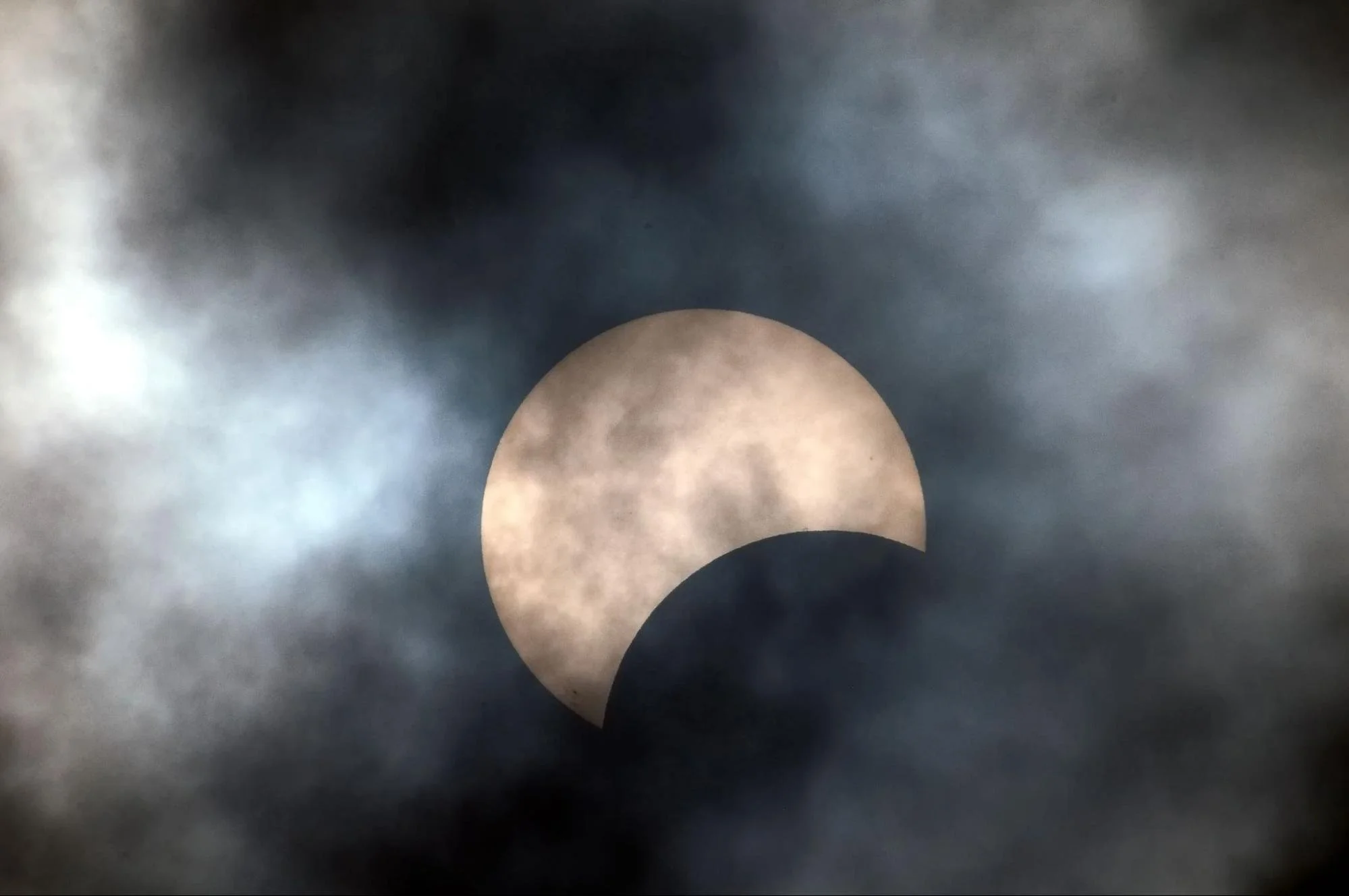
How To Not Go Blind During Your Next Solar Eclipse
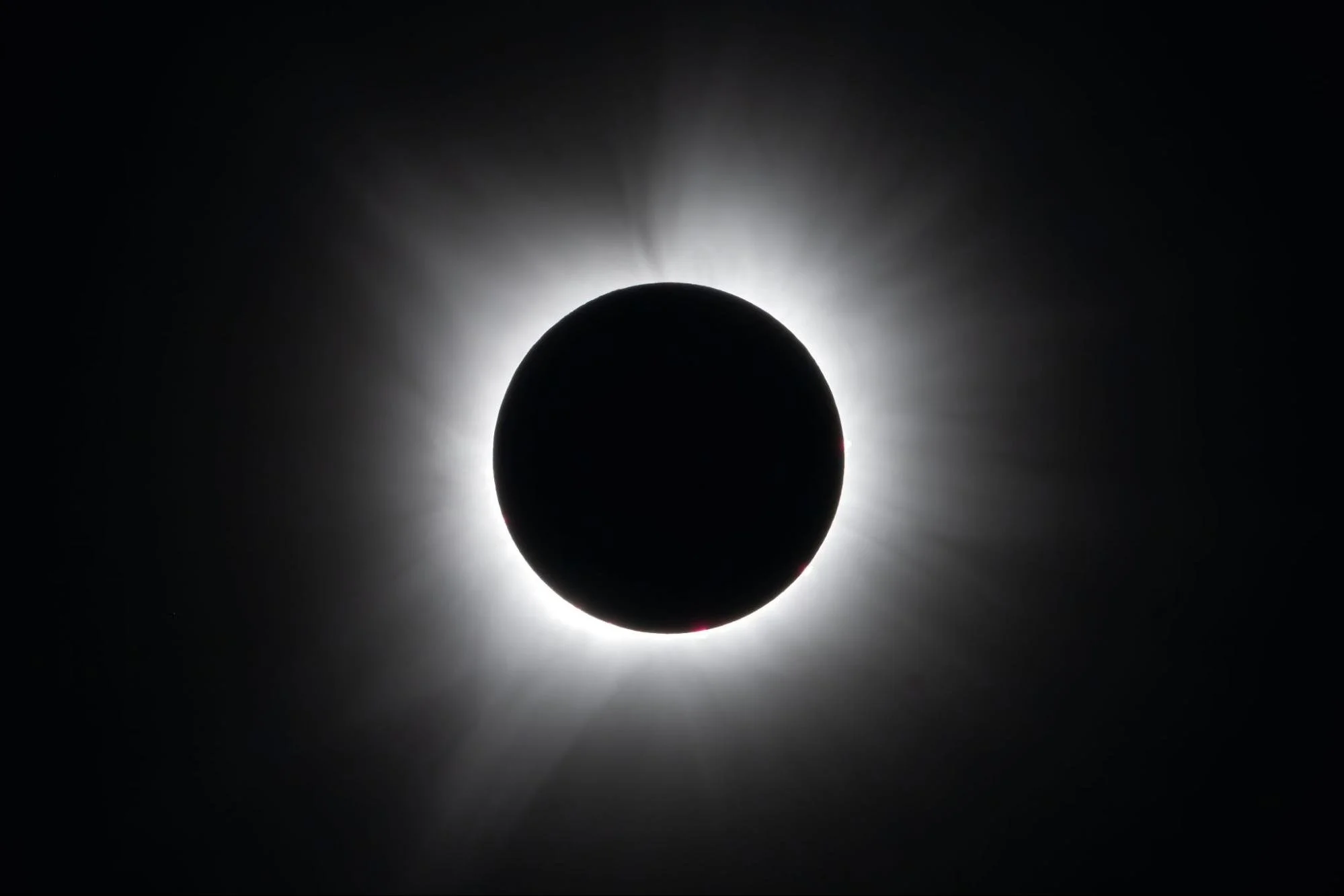
The next total solar eclipse in the US will be on August 23, 2044. It might sound like a long time off from now, but you’re going to want to be prepared so you don’t go blind!
From an astronomical point-of-view, there is nothing more exciting, exhilarating, and beautiful than witnessing a solar eclipse live with your own eyes (OK, the Aurora Borealis is absolutely enchanting - but there is no risk of going blind when viewing the Aurora).
Here are a few things to keep in mind when you view your next solar eclipse.
What exactly is a solar eclipse?
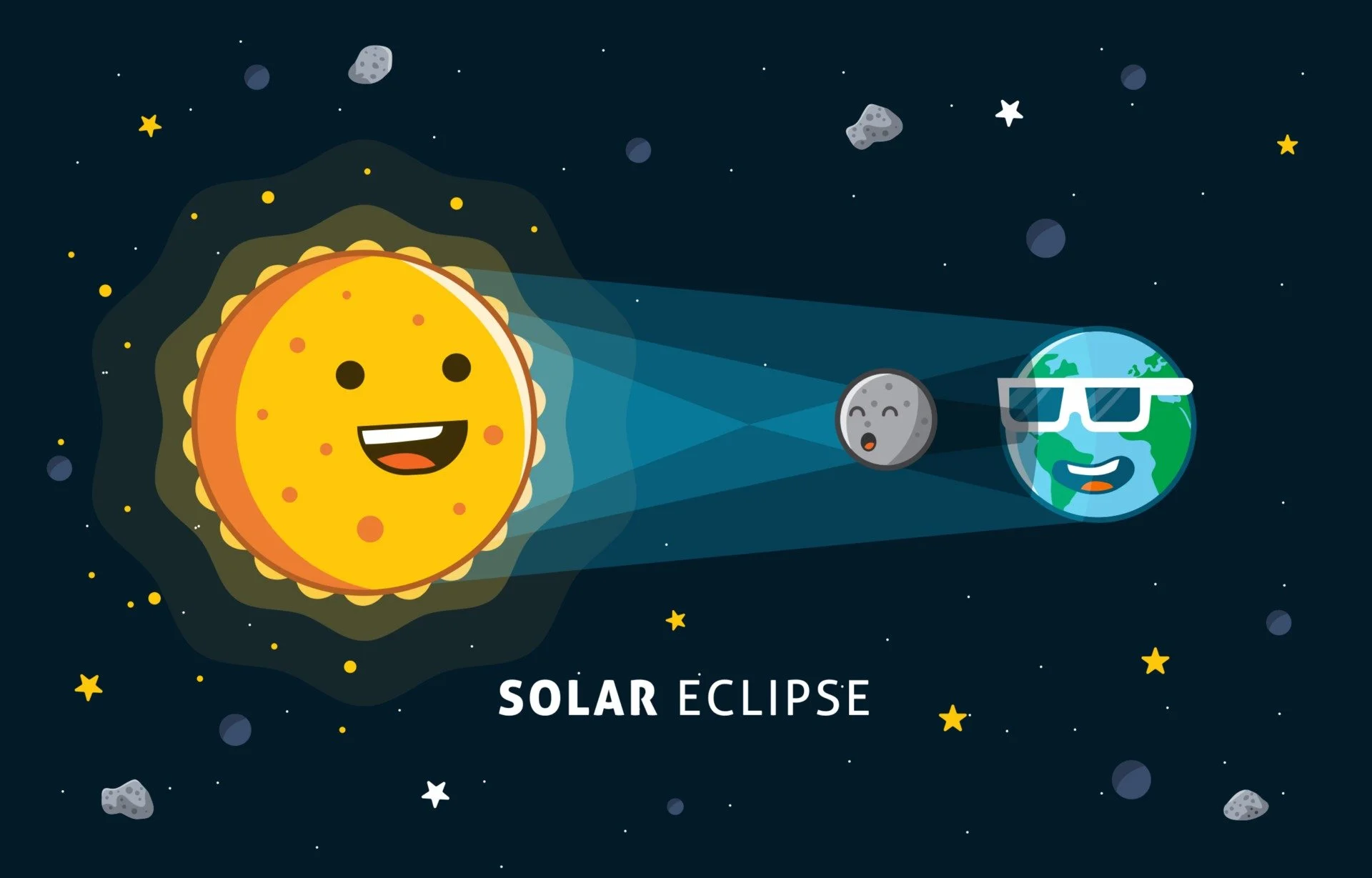
Simply put, a solar eclipse occurs when the moon passes directly between the sun and Earth. This casts a shadow of the moon onto the Earth. The shadow either fully or partially blocks the sun's light.
Check this one out from 2024:
2024 solar eclipse! Totality over Ohio, New York and Maine in 2-minute time-lapse
There are two main parts to a solar eclipse:
Partial Solar Eclipse
Also called the Penumbra, this is when the moon starts to gradually cover the face of the sun.
It lasts for about an hour total.
You NEED to wear your special eye protection.
Full Solar Eclipse (Totality)
Also called the Umbra, and lasting about 1 to 2 minutes, this is the full eclipse (known as totality). This occurs when the moon completely covers the sun’s face.
Daylight transforms into a deep, eerie twilight.
The solar corona (the sun’s outer atmosphere) glows brightly like a magnificent halo encircling the moon.
You can actually see a few of the brightest stars and planets in the sky.
The ambient temperature drops, giving even the hottest climates a bizarre coolness, and even a slight breeze.
During totality (even though I don’t advise it) you can remove your protective glasses. But they must be put on right before totality ends.
Can you go blind from viewing a solar eclipse without eye protection?
In a word - Absolutely.
Looking at the sun without proper eye protection, even for a brief period of time, can damage your retina permanently. It can even cause blindness. This is known as solar retinopathy. Also referred to as solar maculopathy.
Solar retinopathy occurs when intense light energy damages the retina. This can happen from staring at the sun, a solar eclipse, laser pointers, or welding. This can create a blind-spot or “scotoma” which is a temporary or permanent loss of central vision.
What actually gets damaged in the eye during a Solar Eclipse?
The area of the retina that we use to see the world straight ahead is called the macula.
In the macula we find the conecells. These are the cells that are responsible for clarity and color. They work great in well-lit environments.
The retinal cells that are off to the sides, away from the macula, are rods. They are responsible for peripheral vision, seeing blacks and grays, and movement.
It is damage to the cone cells in the macula that makes solar retinopathy so devastating.
Even though it is amazing how the eye works to focus light from the world around us onto the retina, this can also cause “The Magnifying Glass Effect”. This is when your eyes focus intense high energy short wavelength light (UV light) directly onto the macula; just like a magnifying glass burning a hole in a piece of paper. This causes a Photochemical Injury.
For All the Science Nerds Like Me: All about Photochemical Injuries
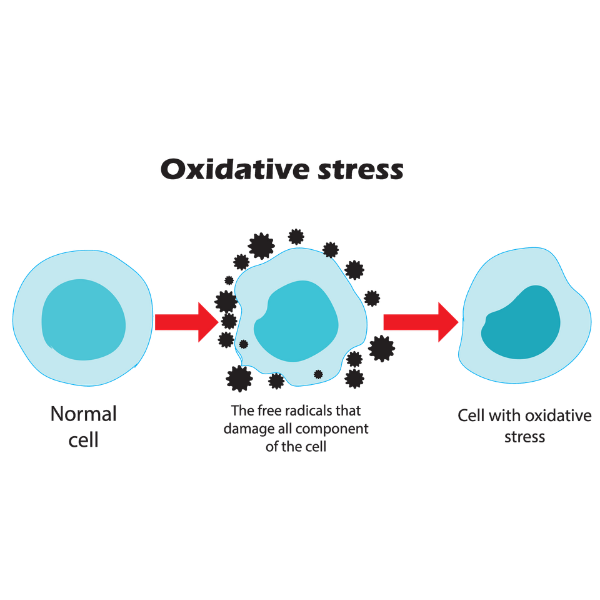
A Photochemical Injury, unlike sunburn of the skin, is damage caused by a photochemical reaction. The intense heat starts chemical reactions that create “free radicals” in the retina.
Free radicals are unstable molecules. They are created when impurities enter the body, and they only stabilize when they steal electrons from cells. This is called oxidative stress. Excess amounts can damage DNA, proteins, and lipids. This causes aging and disease.
In solar maculopathy, free radicals damage cones in the macula, which creates the central blind spot (scotoma) that was mentioned earlier.
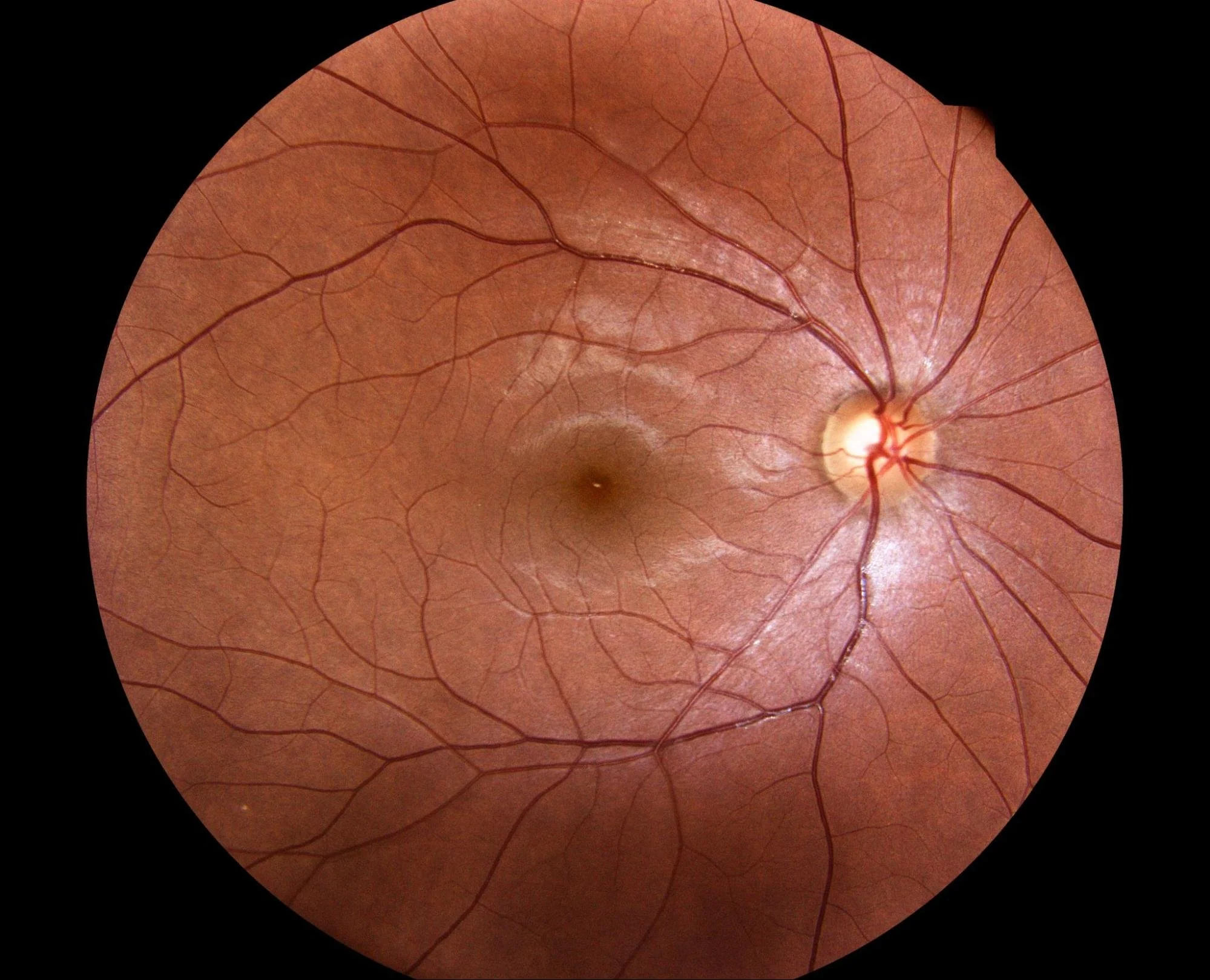
Normal retina. The dark spot in the center of the photo is the macula.
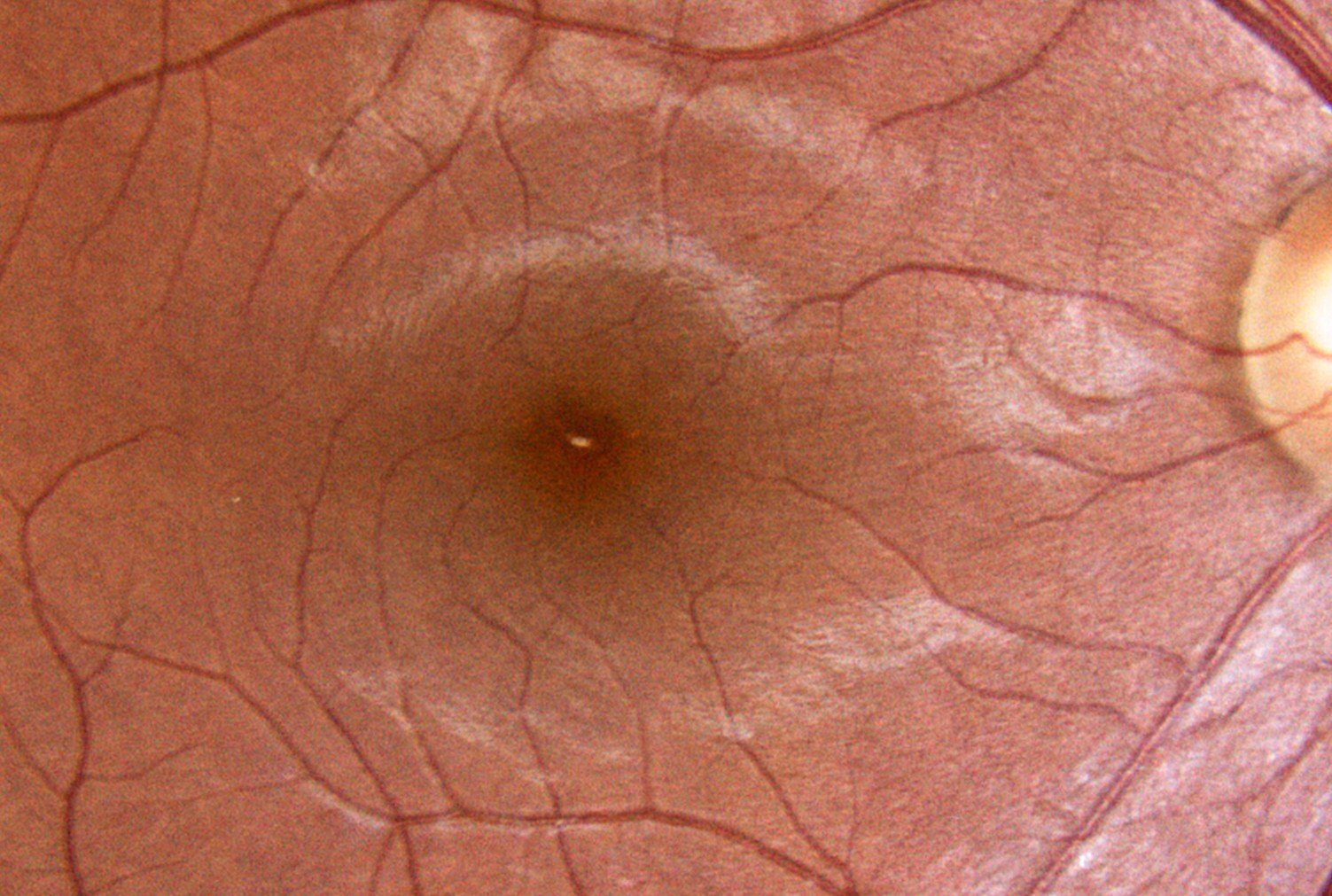
Normal macula magnified
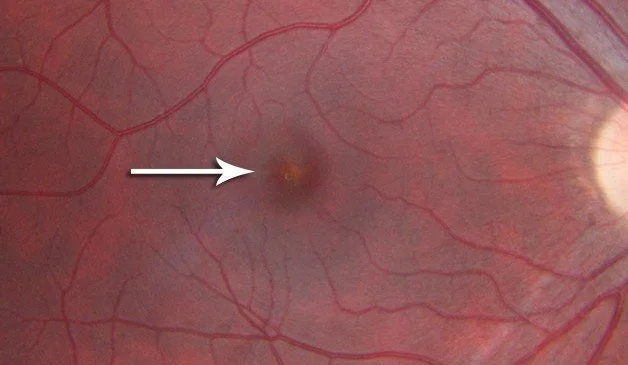
Macula with solar maculopathy representing damaged cone cells.
What are the symptoms?
Blurry vision
Blind spot (scotoma) in one or both eyes.
Dyschromatopsia: Defective color vision.
Metamorphopsia: Objects in the central field of gaze are warped
Micropsia: Objects appear smaller
Headache in the front / temporal side of the head
No eye pain
No pain? What’s up with that?
IMPORTANT: There is something known as the “No Pain” theory when staring at a solar eclipse. Uninformed people think that it’s ok to stare at a partial eclipse without eye protection. After all, if it is not uncomfortable, and you don’t feel any eye pain, then it should be safe. Right?
WRONG!
If you look at the sun on a bright, beautiful (non-eclipse) day when there is no fog, there are no clouds, and the moon isn’t blocking the sun, then you will experience extreme discomfort – staring at the sun during a partial eclipse because it isn’t painful is downright stupid.
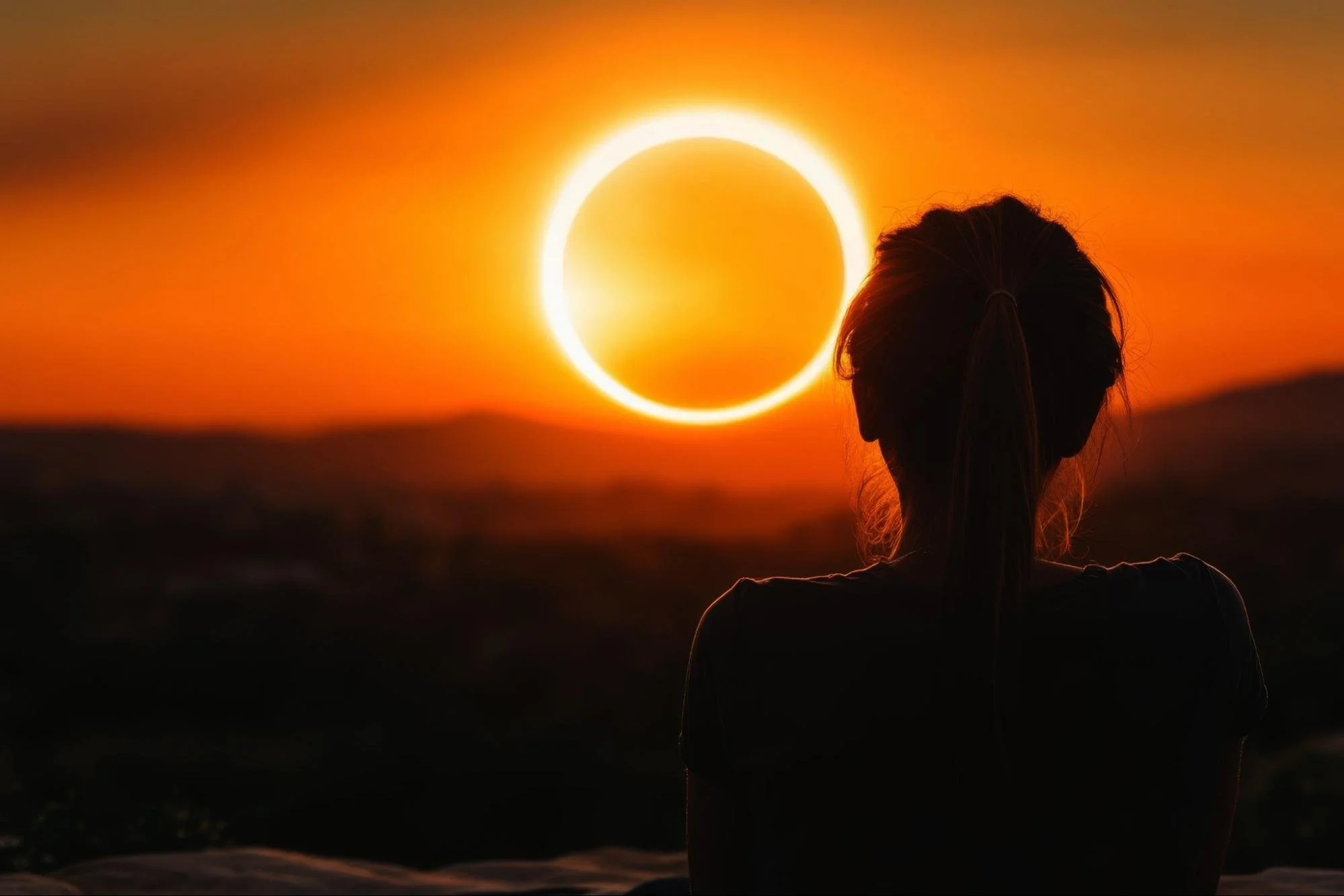
Yes, you won’t feel eye pain while observing a partial solar eclipse without eye protection.
Yes, you will be very comfortable as you gaze at what appears to be the sun “safely hidden’ (at least in part) by the moon.
But you would be horribly mistaken if you thought that your eyes and vision were safe from harm.
There are no pain receptors in your retina. This can cause severe damage without immediate discomfort. Symptoms generally don’t appear until hours to days after exposure.
So what is the reality? The danger of painless, permanent vision loss while staring at the sun is 100% real. Don’t let anyone tell you otherwise.
If you do look at a partial solar eclipse longer than you should without eye protection, can vision improve? Or are you screwed?
Without sugar coating it: You are indeed screwed. But let’s assume for a moment that you didn’t stare at the sun long enough for permanent damage. Can your vision be restored?
Well, yes. Vision can improve due to the natural healing of the retina's photoreceptor outer segments.
How is this possible? Some damaged cones can recover or be compensated for by surrounding cells. It can take three to six months.
What’s the treatment for solar retinopathy?
Uh…none. There is no known treatment for solar retinopathy. There are some people who luckily improve without treatment. Clinicians have prescribed steroids, but there is no solid proof that they do anything.
How do you know if damage was done from looking at a partial solar eclipse?
You need to get a full eye exam as soon as possible.
Traditionally, an ophthalmologist would have been the recommended professional to go to. However, optometrists are trained to examine and diagnose many retinal issues, including solar retinopathy.
The following procedures should be included in an eye exam to evaluate a patient for solar retinopathy:
Complete case history
The doctor will ask many questions to determine if the patient could indeed have a retinal disorder due to the sun, laser pointer, welding etc.
Visual acuity measurement
You read the smallest letters that you can on the eye chart.
Color vision test
Solar retinopathy can affect your ability to see colors.
Biomicroscope exam
This fancy microscope is used to observe the front of the eye, but can also disclose detailed information of the retina and other internal structures of the eye.
Dilated fundus exam
“Fundus” is a fancy word that describes the back of the inside of the eye; where the retina can be found. The eye doctor needs to get a clear, concise view of the inside of your eye. We use special eye drops that dilate (widen) your pupils.Try to have a designated driver with you, and bring a pair of sunspecs if the sun is shining when your exam is complete. The irony! Here are some of the important procedures performed once your pupils are dilated:
Binocular Indirect Ophthalmoscopy (BIO): No, your eye doctor is not wearing night-vision glasses. They are using a special device that allows them to get a very good look at your entire retina.
Optical Coherence Tomography (OCT): A special instrument designed to shine light waves in your eye to capture high-resolution, cross-sectional, 3D images of the retina and optic nerve. Very cool.
Fluorescein angiography (FA): Used to examine blood flow in the retina and choroid, FA helps to identify blood vessels that are leaking, blocked, or new (called neovascularization – a very bad thing because new blood vessels leak and hemorrhage). The ophthalmologist injects fluorescein (a yellow dye) into your arm, and then takes pictures of your retina as the dye courses through the blood vessels.
Fundus autofluorescence (FAF): FAF does not require injection of fluorescein dye in order to get an image of the retina, but it does have some limitations compared to FA. It makes use of the fluorescent properties of a molecule called lipofuscin which is found in the outer layer of the retina, the retinal pigment epithelium.
Things to remember so that you don’t go blind during a solar eclipse:
Don’t look directly at the sun without proper eye protection. Duh.
Use ISO-Certified Glasses (ISO 12312-2). Only use special-purpose solar filters that meet the ISO 12312-2 international safety standard. Make sure that there are no scratches in the lenses. Inspect the glasses closely before use; if damaged, discard them.
DO NOT use ordinary sunglasses, smoked glass, or multiple layers of sunglasses.
Indirect Viewing: Make a pinhole projector. It’s safe and easy to make. You project an image of the sun through a small hole onto a surface. You can use a cardboard box, aluminum foil, and paper. This way you can avoid looking directly at the sun. How to Make a Box Pinhole Projector
Optical Gadgets: NO NOT EVER LOOK THROUGH A CAMERA, PHONE, TELESCOPE, OR BINOCULARS WITHOUT EYE PROTECTION. A solar filter must be placed on the front of these devices.
Supervision: Make sure that kids and teens are not staring at the sun without you noticing. Keep an eye on them so that they can keep an eye on the world for the rest of their lives.